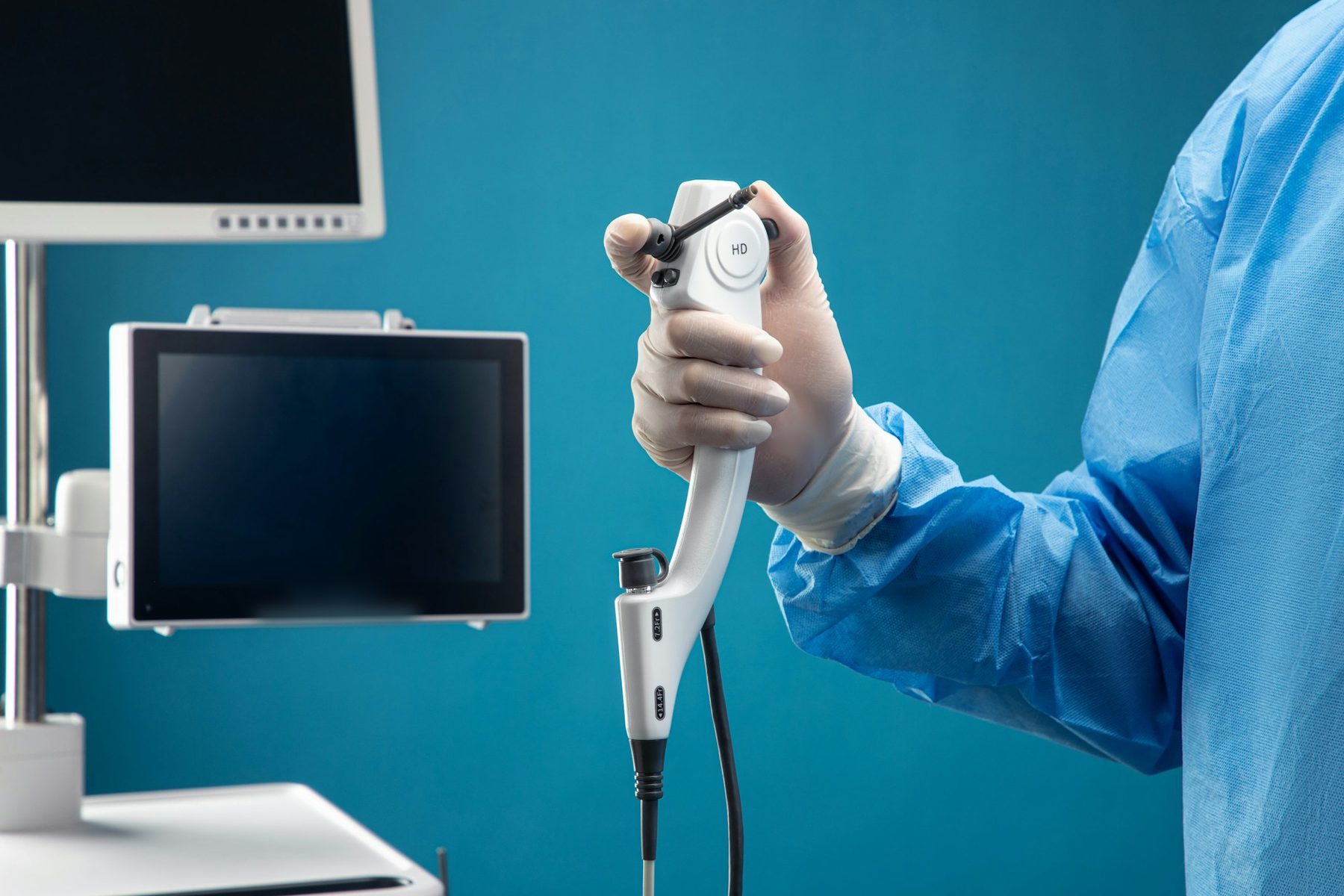
Some digestive studies ask for a look inside the gut with a thin, flexible camera called a scope. It can confirm a condition, collect tiny pieces of tissue or show whether something has changed. This guide explains the two main kinds of scope, how you get ready for each, what sedation usually feels like and what happens once it is over.
Upper endoscopy and colonoscopy
An upper endoscopy passes a scope through the mouth to view the esophagus, the stomach and the first part of the small intestine. It is a common check in studies on eosinophilic esophagitis, GERD and gastroparesis. A colonoscopy passes a longer scope through the anus to view the whole colon, and it can appear in studies on diverticulitis, constipation or irritable bowel syndrome.
Both are usually done in a hospital or clinic procedure room. The scope itself takes well under an hour, but with check-in and recovery you can expect to be there for most of a morning or afternoon. The doctor watches a screen throughout and can save pictures of anything worth a closer look later.
Biopsies: pinhead-sized pieces of lining
During a scope, the doctor can pass small forceps through the instrument and take pinhead-sized pieces of the lining. These biopsies are usually painless, because the inner lining of the gut does not feel a pinch the way skin does. A laboratory then studies them under a microscope for inflammation, a build-up of certain white blood cells or other changes.
In eosinophilic esophagitis research, biopsies are often central, since the number of one type of white blood cell in the lining shows how active the condition is. A study may take biopsies at the start and again later to see whether the lining has calmed. The team can tell you how many scopes their plan includes before you decide anything.
Emptying the stomach or clearing the bowel
An empty gut lets the doctor see clearly. Before an upper endoscopy, that mostly means no food or drink for several hours. Before a colonoscopy, the bowel itself has to be cleared, which takes more planning and a free evening at home. The team gives written instructions, and they tend to cover points like these:
- Low-fiber meals for a day or so, then only clear liquids the day before
- A prescribed bowel preparation drink, often split between the evening before and early that morning
- Staying near a toilet once the preparation starts working, which can happen quickly
- Asking how to handle diabetes medicine, blood thinners or iron tablets rather than adjusting them yourself
Sedation and getting home afterward
Most people receive medicine that leaves them drowsy and relaxed during the procedure, and many remember little of it. Some places offer deeper sedation from an anesthesia team, and some upper endoscopies use only a numbing spray for the throat. You can ask which approach the study site uses and mention any trouble you have had with sedation in the past.
Sedation dulls judgment for the rest of the day, so someone needs to take you home, and driving, working or signing anything important waits until the next day. Mild bloating and passing gas afterward are common, since air is used to open up the gut during the scope. Severe pain, fever or bleeding after a scope calls for contacting the team straight away.
Weighing a study that includes a scope
A study with a scope asks more of you than one built on questionnaires or blood tests, and that is worth weighing honestly. Some people already have scopes as part of their regular care and find one more easy to fit in. Others would rather look at research that avoids a procedure altogether. Either choice is a sensible one.
Clinical Corner arranges no procedures and has no say in how any study is designed. If a study with a scope interests you, get in touch with its team directly to ask how often scopes happen, who performs them and what sedation is offered. Your own gastroenterologist can help you think it over alongside the care you already receive.
Worth remembering from this guide
- An upper endoscopy views the esophagus and stomach, while a colonoscopy views the colon.
- Biopsies are tiny pieces of lining and are usually painless to take.
- Clearing the bowel before a colonoscopy takes planning and a day of clear liquids.
- After sedation, someone takes you home and the rest of the day is for resting.